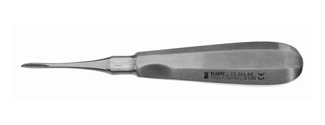
Root Apex Elevator - Helmut Zepf (17.304.00) - Delynov
The Élévateur à racines Apical - Helmut Zepf is a medical device manufactured by Helmut Zepf Medizintechnik GmbH.
- Compliance: Medical device Class I.
- Manufacturer: Helmut Zepf Medizintechnik GmbH.
- Reference: 17.304.00.
- Reserved for healthcare professionals. Read instructions carefully before use.
| Manufacturer: Helmut Zepf |
Complete your order
Our customers often order these together
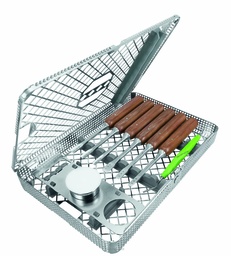 Immediate Dentoalveolar Restoration (IDR) Surgical Kit by Dr José Carlos Martins Da Rosa - Helmut Zepf (41.550.00) - Delynov
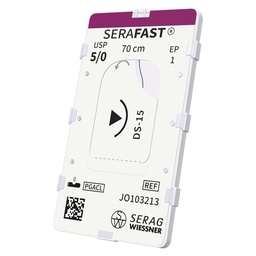 SERAFAST Absorbable Violet Suture 5/0 DS-15 Needle 70cm - Serag & Wiessner - JO103213
Recommended suture
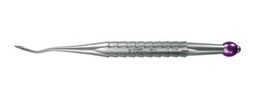
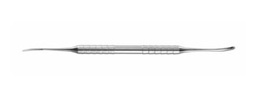
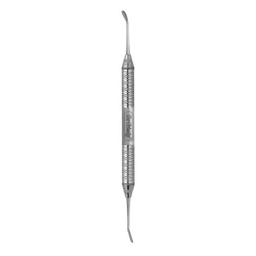 Dr Istvan Urban "Mini Me" Micro Periosteal Elevator (PFIWDS1MK) - Hu-Friedy - Delynov
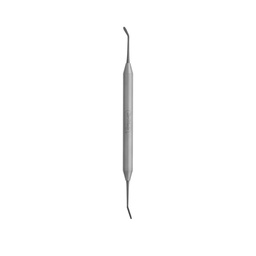 Dr Istvan Urban "Mini Me" Micro Periosteal Elevator, Black Line (PFIWDS1MKX) - Hu-Friedy - Delynov
What is the Helmut Zepf Apical root elevator?
L'élévateur apical - Helmut Zepf (référence 17.304.00) est un instrument manuel de haute précision fabriqué par Helmut Zepf Medizintechnik GmbH. Conçu en acier inoxydable de qualité médicale, cet outil est spécifiquement développé pour les procédures de chirurgie orale nécessitant une manipulation fine des structures radiculaires. Il appartient à la catégorie des instruments d'extraction et se distingue par sa robustesse structurelle adaptée aux contraintes mécaniques de luxation. Ce dispositif est livré non stérile et doit impérativement subir un cycle complet de nettoyage, désinfection et stérilisation avant sa première utilisation par un praticien ou en bloc opératoire.
What are the clinical indications for this instrument?
Cet élévateur apical est indiqué pour l'extraction des racines et des apex, particulièrement dans les situations où l'accès est restreint ou lorsque la racine est fracturée sous le niveau crestal. En chirurgie orale et implantologie, il est utilisé pour rompre les fibres du ligament parodontal afin de mobiliser la dent avant son avulsion finale. Cet instrument d'extraction apical est employé par les praticiens pour faciliter l'avulsion tout en préservant au mieux l'intégrité des parois alvéolaires, une étape cruciale pour de futures poses d'implants ou des procédures de régénération osseuse.
What are the technical characteristics of the 17.304.00 elevator?
The Apical root elevator referenced 17.304.00 by Helmut Zepf is manufactured from medical stainless steel selected for its corrosion resistance and its ability to maintain functional active edges. Although specific dimensions are not detailed, its design meets the requirements of Class I medical devices. The geometry of its working part is optimized to fit into the desmodontal space. As a Helmut Zepf Medizintechnik GmbH product, it benefits from rigorous German engineering guaranteeing compatibility with standardized reprocessing protocols in an autoclave, with no defined maximum limit of treatment cycles subject to proper maintenance.
What are the contraindications for the use of this instrument?
The main medical contraindication documented by the manufacturer Helmut Zepf concerns known hypersensitivity or intolerance of the patient to metals, particularly medical stainless steel. A hypersensitivity reaction can be triggered during contact between the instrument and the tissues. If such a reaction occurs during the intervention, the procedure must be immediately stopped and necessary clinical measures must be taken. Furthermore, the use of the instrument is strictly prohibited if it shows visible damage such as cracks, breaks, or defects on the cutting edges, in order to guarantee patient safety and the efficiency of the surgical gesture.
What are the maintenance and reprocessing precautions?
Like any reusable Class I instrument, the Apical root elevator must undergo a strict reprocessing protocol. Before each use, the practitioner must check for the absence of visible wear or deformations. The process imperatively includes thorough cleaning, disinfection, and sterilization, as Helmut Zepf products are delivered non-sterile. Due to the quality of the materials used, there is no predefined maximum limit of use cycles, but the longevity of the instrument directly depends on compliance with the manufacturer's cleaning and safety instructions. The use of damaged products is dangerous and formally discouraged.
Who is the manufacturer and what standards are respected?
Ce dispositif est fabriqué par Helmut Zepf Medizintechnik GmbH, un fabricant reconnu situé à Seitingen-Oberflacht, en Allemagne. Ce produit est classé comme un dispositif médical de Classe I (Classe Ir selon certaines nomenclatures de retraitement). Il répond aux exigences réglementaires pour les instruments manuels de chirurgie orale. L'utilisation de cet instrument est strictement réservée aux professionnels de santé qualifiés. La conformité aux standards de fabrication garantit que l'acier inoxydable médical utilisé est adapté à un contact tissulaire prolongé lors des actes chirurgicaux, sous réserve du respect des protocoles de stérilisation en vigueur.
State of the art
Specialized surgical instrumentation is evolving towards ergonomic designs.