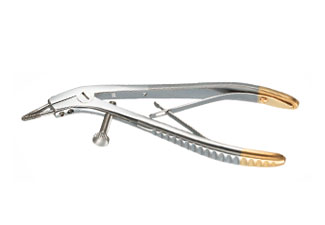
Pinza Telecrown-Grip 2.35 mm - Helmut Zepf (31.185.04) - Delynov - Dental Surgery Product
The Pince Telecrown-Grip 2,35 mm - Helmut Zepf is a medical device manufactured by Helmut Zepf Medizintechnik GmbH.
- Compliance: Medical device Class I.
- Manufacturer: Helmut Zepf Medizintechnik GmbH.
- Reference: 31.185.04.
- Reserved for healthcare professionals. Read instructions carefully before use.
What is the Helmut Zepf Telecrown-Grip 2.35 mm forceps?
The Telecrown-Grip 2.35 mm forceps, referenced under code 31.185.04, is a specialized manual instrument designed by the manufacturer Helmut Zepf Medizintechnik GmbH. Manufactured from high-quality medical stainless steel, this telecrown forceps is specifically structured to offer a firm and secure grip on prosthetic components. Its robust design meets the requirements of surgical and prosthetic environments, ensuring precise handling during removal interventions. As a Class I instrument, it complies with the rigorous manufacturing standards imposed for non-invasive medical devices used in dental practices.
What are the clinical indications for this instrument?
This instrument is primarily indicated for the removal of crowns and fixed prosthetic elements. In the context of oral surgery or implantology, the crown removal forceps is used to disinsert temporary or permanent elements to access underlying tissues or implant abutments. Its use is strictly reserved for qualified healthcare professionals. It is used during the prosthetic removal phases necessary before a new guided bone regeneration (GBR) intervention or a revision of the implant treatment plan, allowing for efficient management of the components in place.
What are the technical characteristics of the 31.185.04 forceps?
The Telecrown-Grip forceps is distinguished by a jaw opening calibrated at 2.35 mm, optimizing the grip of small-sized elements. Manufactured by Helmut Zepf in Germany, it uses medical stainless steel selected for its mechanical resistance and its ability to undergo repeated sterilization cycles. The device is delivered non-sterile and must undergo a complete cleaning, disinfection, and sterilization protocol before its first use and after each clinical act. Its ergonomic design allows for controlled force transmission, limiting the risk of slipping during traction on the crown.
What are the contraindications for the use of this forceps?
The main medical contraindication lies in known hypersensitivity or intolerance to metals in the patient. Contact of medical stainless steel with tissues can trigger an allergic reaction in sensitive subjects. If such a hypersensitivity reaction is observed during the procedure, the manufacturer Helmut Zepf specifies that the procedure must be immediately interrupted and appropriate medical measures must be taken. It is also prohibited to use the instrument if it shows visible damage, such as cracks, breaks, or defects on the cutting edges, to ensure patient safety.
What are the maintenance and sterilization precautions?
As it is a non-resorbable and reusable instrument, rigorous maintenance is essential. Before each use, the practitioner must check for the absence of visible damage or wear. The reprocessing process includes thorough cleaning, disinfection, and complete sterilization. Helmut Zepf emphasizes that due to the design of the instrument and the materials used, there is no defined maximum limit of treatment cycles, as long as functional integrity is preserved. The use of damaged or worn products is strictly prohibited to prevent any risk of complication during crown removal.
Who is the manufacturer and what standards are respected?
The device is manufactured by Helmut Zepf Medizintechnik GmbH, a recognized company located in Seitingen-Oberflacht, Germany. This product is classified as a Class I medical device according to current regulations. The manufacturer ensures the compliance of the instrument with the safety and performance requirements for manual dental instruments. Each crown removal forceps is subjected to strict quality controls during its production to guarantee its clinical reliability. Professionals can refer to the manufacturer's instructions for cleaning and sterilization to maintain device compliance throughout its service life.
State of the art
Guided bone regeneration (GBR) in implantology relies on membrane fixation quality.
Specifications
| Manufacturer | Helmut Zepf |
| Tags | |
|---|---|
| Tags | |