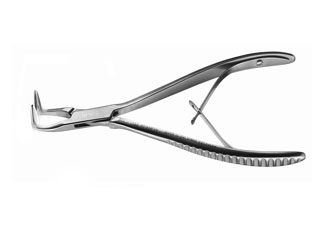
Friedman Micro Bone Rongeur - Helmut Zepf (42.316.15) - Delynov
The Micro Pince-Gouge Friedman - Helmut Zepf is a medical device manufactured by Helmut Zepf Medizintechnik GmbH.
- Compliance: Medical device Class I.
- Manufacturer: Helmut Zepf Medizintechnik GmbH.
- Reference: 42.316.15.
- Reserved for healthcare professionals. Read instructions carefully before use.
| Manufacturer: Helmut Zepf |
Complete your order
Our customers often order these together
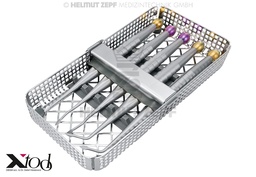 Approximal elevator kit for dental surgery, set of 5 instruments - Helmut Zepf (17.007.75) - Delynov
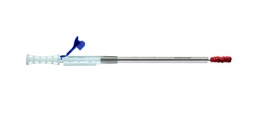
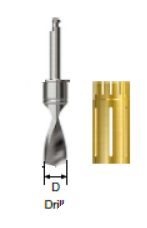 Cortical bone collector with stopper, diameter 6.0 mm (ABC604L), height 21.94 mm - Osstem - Delynov
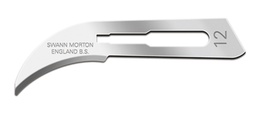 Swann-Morton Sterile Carbon Steel Blade No.12 (ST12) (0204) - Delynov - X100
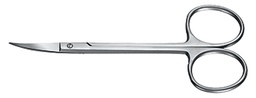 Curved Gum Scissors 11.5 cm - Helmut Zepf (46.051.11) - Delynov
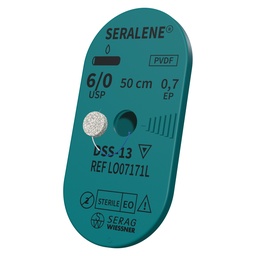 SERALENE non-absorbable blue (6/0) DSS-13 needle of 50 CM box of 24 sutures - Serag & Wiessner (LO07171L) - Delynov
Recommended suture
What is the Helmut Zepf Friedman micro rongeur?
The Friedman micro rongeur, referenced under code 42.316.15 by Helmut Zepf, is a specialized surgical instrument for the manipulation of hard tissues. Manufactured from high-quality medical stainless steel by Helmut Zepf Medizintechnik GmbH, it consists of stable shafts and cutting jaws designed for use in restricted access areas. This Class I instrument is specifically developed to meet the requirements of bone micro-surgery, offering a robust structure capable of supporting the forces necessary for bone resection while maintaining optimal maneuverability for the practitioner.
What are the clinical indications for this micro-surgery bone forceps?
The Helmut Zepf bone surgery rongeur is indicated for cutting or crushing bones during oral surgical procedures. In clinical practice, it is used to regularize alveolar ridges after extraction, eliminate exostoses, or remove troublesome bone spicules. Its micro design allows for precise intervention during implant site preparation or within the framework of guided bone regeneration (GBR). The main objective is to smooth irregular bone surfaces to promote optimal mucosal healing or prepare for the reception of a prosthesis or an implant.
What are the technical characteristics of this instrument?
Le micro rongeur chirurgical Friedman (référence 42.316.15) se distingue par sa construction en acier inoxydable médical, garantissant une résistance à la corrosion et une longévité accrue. Ses branches stables transmettent efficacement la force exercée par le praticien aux pointes coupantes. Ce dispositif appartient à la Classe I selon la réglementation des dispositifs médicaux. Il est livré non stérile et nécessite un protocole complet de nettoyage, désinfection et stérilisation avant la première utilisation ainsi qu'entre chaque patient. Sa conception permet une manipulation rigoureuse pour les tâches de coupe osseuse fine.
What are the contraindications for using the friedman rongeur?
La principale contre-indication concerne l'hypersensibilité ou l'intolérance aux métaux. Le contact avec l'acier inoxydable médical peut déclencher une réaction allergique chez certains patients sensibles. Si une telle réaction d'hypersensibilité survient pendant l'intervention, la procédure doit être immédiatement interrompue et les mesures médicales nécessaires doivent être prises. Il est donc impératif de vérifier les antécédents allergiques du patient avant toute utilisation. De plus, l'utilisation de l'instrument est strictement réservée aux praticiens qualifiés en chirurgie orale, implantologie et parodontologie.
What are the maintenance and safety precautions?
All Helmut Zepf instruments must imperatively be cleaned, disinfected, and sterilized before their first use and after each subsequent use. Before each intervention, the practitioner must perform a meticulous visual inspection to detect any possible damage or signs of wear, such as cracks, breaks, or defects on the cutting edges. The use of a damaged or worn instrument is formally prohibited. Due to the design and materials used, there is no defined maximum limit for the number of processing cycles, but the functional state of the instrument must remain the sole validation criterion.
Who is the manufacturer and what standards are respected?
This medical device is manufactured by Helmut Zepf Medizintechnik GmbH, a recognized company located in Seitingen-Oberflacht, Germany. The product complies with current medical device regulations, being classified as Class I. As the official manufacturer, Helmut Zepf guarantees the use of materials complying with medical standards for surgical instrumentation. Healthcare professionals must comply with the manufacturer's instructions regarding reprocessing and verification of compatibility with other products before any clinical implementation.
State of the art
Guided bone regeneration (GBR) in implantology relies on membrane fixation quality.