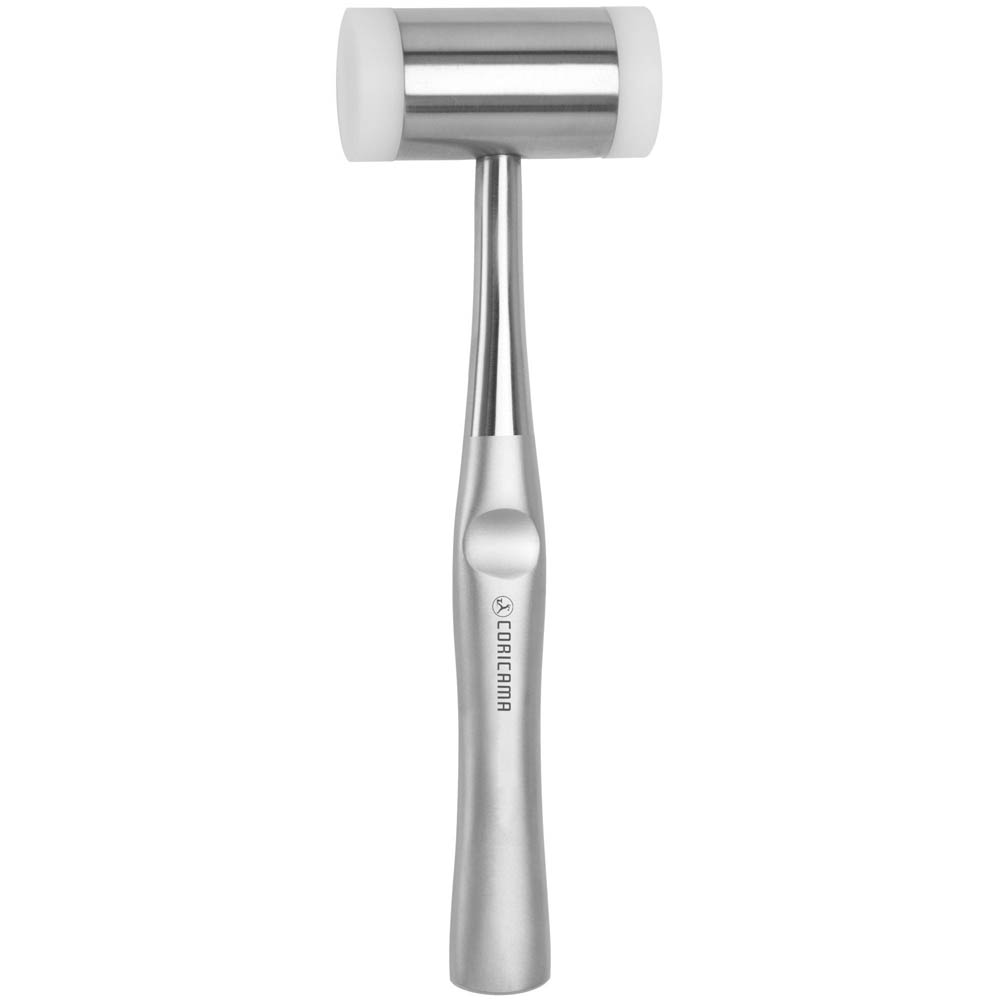
Title Mead Maillet 320g MM180 (462270) by Coricama - Delynov
The Maillet Mead 320g MM180Coricama is a medical device manufactured by CORICAMA srl.
- Manufacturer: CORICAMA srl.
- Reference: 462270.
- Reserved for healthcare professionals. Read instructions carefully before use.
What is the Mead mallet 320g MM180 (462270) Coricama?
The Mead mallet 320g MM180, referenced under code 462270 by the manufacturer CORICAMA srl, is a manual percussion instrument used in buccal surgery. This device is characterized by a massive head with a specific weight of 320g, designed to deliver precise and reproducible impact force. As a durable consumable in the CORICAMA range, it is structured to meet the requirements of sterilization and intensive handling in the dental office. Its design allows for a stable grip, facilitating the work of the implantologist during surgical phases requiring mechanical action on bone tissue or other surgical devices.
What are the clinical indications for this Mead mallet?
The implantology mead mallet is primarily indicated for interventions requiring an osteotomy or manipulation of the alveolar bone structure. In implant surgery, it is used for percussing osteotomes during crestal approach sinus lift techniques or bone ridge expansion. In general oral surgery, this dental mead mallet accompanies the use of bone chisels for the resection of bone segments, the harvesting of autogenous grafts, or tooth division during complex extractions. Its use is fundamental to ensure controlled penetration of sharp or condensing instruments into mineralized tissues.
What are the technical characteristics of the MM180 model?
The CORICAMA MM180 model features technical specifications centered on balance and mass. With a weight of 320g, it falls into a category of mallets offering sufficient inertia to limit the practitioner's effort while maintaining high precision of movement. Technical reference 462270 corresponds to a specific configuration of the head and handle, optimized for the transmission of kinetic energy without excessive rebound. Although material details are not explicitly listed, this type of instrument is traditionally designed to withstand repeated decontamination and autoclave cycles, guaranteeing operational longevity in the sterile environment of the operating room.
What are the contraindications for the use of this instrument?
Contraindications for the use of the Mead mallet 320g MM180 are mainly related to the patient's clinical conditions and the nature of the treated bone. Its use is discouraged on extremely weakened or pathological bone structures where percussion, even light, could lead to unwanted fractures or damage to adjacent anatomical structures (nerves, sinuses without adequate protection). Additionally, the use of this mallet is contraindicated with percussion instruments not intended for this purpose, which could lead to metallic splinters or deformation of the striking surfaces. The practitioner must evaluate bone density before any application of mechanical force.
What are the maintenance precautions for this non-resorbable device?
As a reusable metallic instrument, the CORICAMA Mead mallet requires a rigorous reprocessing protocol after each intervention. Although it is not a resorbable device, its durability depends on compliance with cleaning, disinfection, and sterilization cycles. It is imperative to check the integrity of the striking surfaces to detect any trace of corrosion or metal mushrooming that could compromise asepsis or percussion efficiency. Precautions include the use of neutral pH cleaning solutions and complete drying before autoclaving, in accordance with standard recommendations for stainless steel surgical instrumentation.
Who is the manufacturer and what standards are respected?
The official manufacturer of this device is CORICAMA srl, a company recognized in the manufacture of precision instrumentation for dental surgery. The product is marketed under the brand CORICAMA. Regarding specific standards and certifications, such as the regulatory class or CE marking, this information is not specified in the current technical documentation. It is the responsibility of the healthcare professional to systematically refer to the instructions for use and the labeling of the delivered product to verify regulatory compliance and specific safety instructions for the lot (reference 462270) before any clinical implementation.
State of the art
Surgical medical consumables play a decisive role in operative safety.