TREPAN. INNER DIAMETER 9.0 MM - Helmut Zepf (08.910.11S) - Delynov
The TREPAN. DIAMETRE INTERIEUR 9.0 MM - Helmut Zepf is a medical device manufactured by Helmut Zepf Medizintechnik GmbH.
- Compliance: Medical device Class IIa.
- Manufacturer: Helmut Zepf Medizintechnik GmbH.
- Reference: 08.910.11S.
- Reserved for healthcare professionals. Read instructions carefully before use.
What is the Helmut Zepf 9.0 mm trepan?
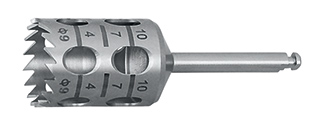
The Helmut Zepf trepan (reference 08.910.11S) is a surgical rotary instrument designed for bone harvesting and explantation procedures. This device features an inner diameter of 9.0 mm, allowing for precise core drilling. Manufactured by Helmut Zepf Medizintechnik GmbH, this implantology trepan drill is a robust tool intended for use on a contra-angle. Its structure is optimized for the circular cutting of hard tissues, offering practitioners a reliable solution for bone volume management or the removal of implanted devices. As a Class IIa device, it meets safety requirements for short-term invasive interventions in the oral cavity.
What are the clinical indications for this dental surgery trepan drill?
This trepan has two main clinical indications in oral surgery. Firstly, it is used to obtain cylindrical bone blocks from the jaw. These harvests can be directly repositioned as grafts or passed through a bone mill for subsequent treatment in the form of chips. Secondly, this implantology trepan is indicated for the explantation of implants. The choice of the 9.0 mm diameter must be correlated to the size of the implant to be removed or the volume of the bone block desired by the surgeon. It allows for targeted intervention around the area of interest, facilitating the recovery of autogenous tissue or the release of osseointegrated metallic structures.
What are the technical characteristics of instrument 08.910.11S?
The Helmut Zepf 08.910.11S trepan is characterized by an inner diameter of 9.0 mm. Technically, it must be attached to a contra-angle (elbow) with a motor set between 800 rpm and a maximum of 1000 rpm depending on the procedure. The instrument requires abundant irrigation with sterile physiological saline solution, either manually or via the internal irrigation system of the contra-angle. The operative protocol requires continuous in-and-out movements to avoid any overheating or blockage. It is crucial to maintain the rotation of the motor as long as the trepan is inserted in the surgical cavity to prevent any instrument breakage or removal difficulties.
What are the contraindications and precautions for use?
Although the manufacturer does not list specific systemic contraindications in the provided documentation, rigorous precautions must be observed. Excessive pressure during drilling or milling is strictly prohibited to avoid thermal or mechanical injuries. Stopping the motor while the trepan is still engaged in the bone is a major technical error that can lead to instrument breakage or permanent blockage in the cavity. The practitioner must ensure constant and abundant irrigation. As with any implantology procedure, the choice of diameter must be rigorously planned according to the patient's anatomy and the dimensions of the implant to be explanted.
What are the precautions during handling for explantation?
During an explantation, the surgeon must choose the trepan based on the outer diameter of the implant to be removed. The motor must be set to a speed range between 800 rpm and 1000 rpm maximum. The milling process is performed using smooth insertion and extraction movements, accompanied by abundant sterile saline irrigation. It is imperative not to apply high pressure during application. Heat management is a critical factor in preserving the integrity of the surrounding tissues. Continuous rotation of the Helmut Zepf trepan throughout the bone contact phase is necessary to guarantee safe and effective extraction of the implanted device.
Who is the manufacturer and what standards are respected?
This medical device is manufactured by Helmut Zepf Medizintechnik GmbH, a recognized manufacturer located in Seitingen-Oberflacht, Germany. This trepan is classified as a Class IIa medical device according to current regulations (MDC0483). Compliance with Helmut Zepf's rigorous manufacturing protocols guarantees an instrument that meets the requirements of dental and implant surgery. As a product distributed by Delynov, it meets the quality standards required for reusable invasive devices, provided that the cleaning, sterilization, and use instructions provided by the German manufacturer are scrupulously followed to maintain cutting performance and patient safety.
State of the art
Surgical medical consumables play a decisive role in operative safety.
Specifications
| Manufacturer | Helmut Zepf |
| Tags | |
|---|---|
| Tags | |