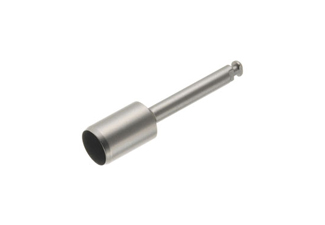
Trephine Mucous - Helmut Zepf (08.920.05) - Delynov
The TREPAN MUQUEUX - Helmut Zepf is a medical device manufactured by Helmut Zepf Medizintechnik GmbH.
- Compliance: Medical device Class I.
- Manufacturer: Helmut Zepf Medizintechnik GmbH.
- Reference: 08.920.05.
- Reserved for healthcare professionals. Read instructions carefully before use.
| Manufacturer: Helmut Zepf |
Complete your order
Our customers often order these together
 Master-Pin refill (pin) - (MP10) - Meisinger - Hager & Meisinger GmbH (36BMP000010) - Delynov
 Dr Istvan Urban "Mini Me" Micro Periosteal Elevator (PFIWDS1MK) - Hu-Friedy - Delynov
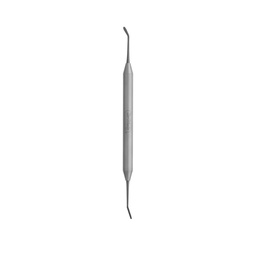 Dr Istvan Urban "Mini Me" Micro Periosteal Elevator, Black Line (PFIWDS1MKX) - Hu-Friedy - Delynov
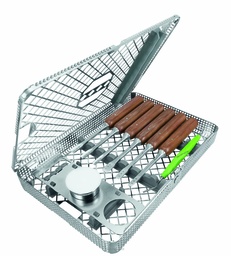 Immediate Dentoalveolar Restoration (IDR) Surgical Kit by Dr José Carlos Martins Da Rosa - Helmut Zepf (41.550.00) - Delynov

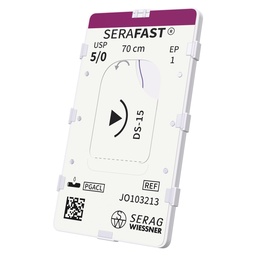 SERAFAST Absorbable Violet Suture 5/0 DS-15 Needle 70cm - Serag & Wiessner - JO103213
Recommended suture
What is the Helmut Zepf 08.920.05 mucosal trephine?
Le trépan muqueux Helmut Zepf, référencé sous le code 08.920.05, est un instrument chirurgical manuel de haute précision conçu pour la manipulation des tissus mous. Fabriqué en acier inoxydable médical par Helmut Zepf Medizintechnik GmbH, cet outil est spécifiquement structuré pour réaliser des prélèvements circulaires nets. Sa conception permet aux praticiens en chirurgie orale d'obtenir des échantillons ou greffons tissulaires calibrés. En tant que dispositif de Classe I, il répond aux exigences de qualité pour une utilisation dans des environnements cliniques exigeants, assurant une robustesse structurelle lors des procédures de chirurgie orale.
What are the clinical indications for this gingival trephine drill?
This device, frequently called a gingival trephine drill by practitioners, is indicated for the extraction of punch biopsies or the harvesting of skin and mucosal grafts. In implant and periodontal surgery, it is used to harvest soft tissue grafts necessary for gingival augmentation or recession coverage. It also allows for precise mucosal coring to access alveolar bone or for pathological analysis. Its use is strictly reserved for qualified healthcare professionals mastering tissue harvesting protocols.
What are the technical characteristics of this instrument?
The Helmut Zepf mucosal trephine (reference 08.920.05) is characterized by its full construction in medical stainless steel, a material chosen for its resistance and compatibility with reprocessing cycles. The instrument features a sharpened circular cutting edge allowing for a clean tissue incision. It is delivered non-sterile and requires rigorous preparation before each use. The instrument design does not define a maximum limit for processing cycles, but its integrity must be systematically checked for any signs of wear, cracks, or defects on the cutting edges before the surgical act.
What are the contraindications for the use of this trephine?
The main medical contraindication related to the use of this instrument is metal intolerance or hypersensitivity in the patient, as the instrument is composed of medical stainless steel. If a hypersensitivity reaction is triggered during contact with the mucosa, the procedure must be immediately interrupted and necessary clinical measures must be taken. It is also contraindicated to use the product if it shows visible damage such as breaks or dull cutting edges, as this could compromise patient safety and the quality of the tissue sample.
What are the maintenance and reprocessing precautions?
The Helmut Zepf trephine is a reusable device that must imperatively be cleaned, disinfected, and sterilized before the first use and after each subsequent use. The cleaning process must be complete to eliminate all biological residue. Before each intervention, the practitioner must inspect the instrument to identify any visible damage (cracks, corrosion). The use of damaged or worn products is prohibited. Since the products are delivered non-sterile, compliance with current sterilization protocols is crucial to guarantee asepsis during gum and mucosal surgeries.
Who is the manufacturer and what standards are respected?
The official manufacturer of this device is Helmut Zepf Medizintechnik GmbH, located in Seitingen-Oberflacht, Germany. This mucosal trephine is classified as a Class I medical device according to current regulations. The manufacturer imposes strict guidelines regarding safety and use, emphasizing that its products are intended exclusively for healthcare professionals. Compliance with German manufacturing standards ensures traceability and material quality meeting the needs of oral surgery operating rooms. Compatibility with other instruments must also be verified by the practitioner before any combined procedure.
State of the art
Surgical medical consumables play a decisive role in operative safety.