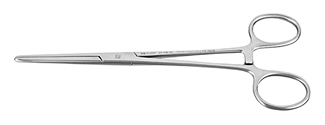
Rochester Pean Forceps - Helmut Zepf (23.106.16)
The PEAN ROCHESTER PINCE - Helmut Zepf is a medical device manufactured by Helmut Zepf Medizintechnik GmbH.
- Compliance: Medical device Class I.
- Manufacturer: Helmut Zepf Medizintechnik GmbH.
- Reference: 23.106.16.
- Reserved for healthcare professionals. Read instructions carefully before use.
What is the Pean Rochester forceps?
The Pean Rochester forceps, referenced under code 23.106.16 by the manufacturer Helmut Zepf, is a high-precision manual surgical instrument. Designed in medical stainless steel, it belongs to the category of GBR (Guided Bone Regeneration) and general surgery instruments. Its robust structure is specifically adapted to meet the requirements of clinical practice in dental offices and hospital settings. As a Rochester Pean surgery forceps, it offers reliable grip thanks to its worked jaws, allowing practitioners to manipulate tissues or medical devices with great stability during invasive interventions.
What are the clinical indications?
This dental Rochester forceps is indicated for various oral surgery procedures, particularly in implantology and periodontology. Its primary use lies in hemostasis by clamping vessels, but it is also requested for grasping and maintaining soft tissues, membranes, or suture material. The manufacturer Helmut Zepf Medizintechnik GmbH specifies that it is a manual dental instrument intended exclusively for healthcare professionals. It intervenes effectively in pre-implant surgery protocols where flap management and control of the surgical field are critical for the success of tissue regeneration.
What are the technical characteristics?
The Pean Rochester forceps (reference 23.106.16) is distinguished by its manufacture in high-quality medical stainless steel, guaranteeing resistance to repeated sterilization cycles. Although delivered non-sterile, its design allows for complete reprocessing including cleaning, disinfection, and sterilization before each use. Due to its metallic nature, particular attention must be paid to the surface condition of the instrument. The practitioner must check for the absence of visible damage such as cracks, breaks, or defects on the active parts before any intervention. Its technical configuration is optimized for ergonomic handling in restricted oral environments.
What are the contraindications for use?
The main medical contraindication documented by Helmut Zepf Medizintechnik GmbH concerns known hypersensitivity or intolerance to metals, specifically medical stainless steel. If an allergic reaction or hypersensitivity manifests in the patient upon contact with the instrument, the procedure must be immediately interrupted and necessary medical measures must be taken. Furthermore, the use of the instrument is strictly prohibited if it shows visible signs of wear, cracks, or damaged cutting edges, as this could compromise patient safety and the effectiveness of the surgical procedure.
What are the maintenance and reprocessing precautions?
Like any surgical instrument, the Rochester hemostatic forceps must imperatively be cleaned, disinfected, and sterilized before its first use and after each subsequent use. Helmut Zepf products are delivered non-sterile. The reprocessing process must follow standard steam sterilization protocols. The manufacturer emphasizes that due to the robust design and materials used, there is no defined maximum limit of treatment cycles, as long as the instrument does not show functional or structural degradation. It is crucial to validate compatibility with other products used simultaneously during surgery.
Who is the manufacturer and what standards are respected?
The forceps is manufactured by Helmut Zepf Medizintechnik GmbH, a recognized manufacturer located in Seitingen-Oberflacht, Germany. This medical device is classified as Class I (Class Ir according to certain reprocessing specifications), in accordance with current medical device regulations. Compliance with manufacturing standards ensures that the stainless steel used meets medical use requirements. As a Class I device, it meets essential safety and performance requirements. The use of this instrument is strictly reserved for qualified healthcare professionals, thus guaranteeing an application in accordance with the rules of surgical art.
State of the art
Guided bone regeneration (GBR) in implantology relies on membrane fixation quality.
Specifications
| Manufacturer | Helmut Zepf |
| Tags | |
|---|---|
| Tags | |