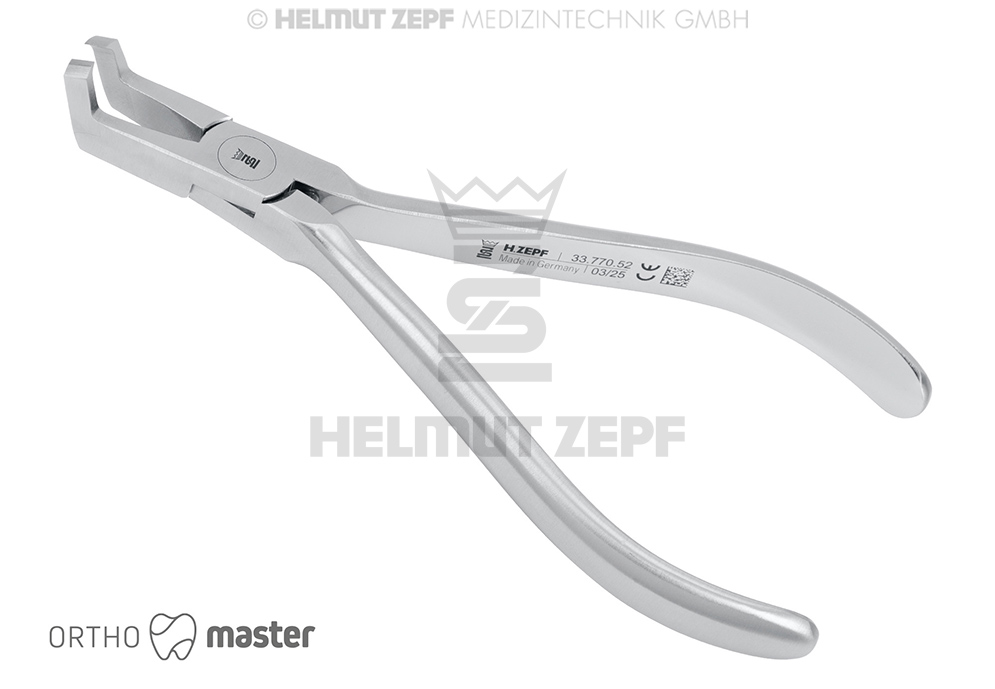
Angulated bracket removing and debonding pliers with hardened steel inserts - Helmut Zepf (33.770.52) - Delynov
The Pince à débracketage et dépose angulée avec insert en acier durci - Helmut Zepf is a medical device manufactured by Helmut Zepf Medizintechnik GmbH.
- Manufacturer: Helmut Zepf Medizintechnik GmbH.
- Reference: 33.770.52.
- Reserved for healthcare professionals. Read instructions carefully before use.
What is the Helmut Zepf angled bracket removing and debonding plier?
The angled bracket removing and debonding plier (reference 33.770.52) is a manual instrument developed by Helmut Zepf for end-of-orthodontic treatment procedures. Its structure is distinguished by an inclined working head and the integration of a hardened steel insert at the jaws. This specific design aims to ensure a firm grip on the bracket while preserving the integrity of the instrument against repeated mechanical stress. As a specialized tool, it allows for the efficient breaking of the adhesive bond between the attachment and the tooth surface. The choice of materials by Helmut Zepf guarantees increased longevity of the active part, preventing rapid deformation when applying the pressure necessary for the removal of bonded devices.
What are the clinical indications for this instrument?
This orthodontic debracketing plier is primarily indicated during the removal phase of fixed appliances in orthodontics or orthognathic surgery. It is used by the practitioner to remove metal or ceramic brackets. Its angled shape is particularly relevant for intervening on premolars and molars, where the insertion axis of a straight plier would be limited by the mouth opening or soft tissues. In oral surgery, it can also be used for the removal of temporary intermaxillary fixation devices using brackets. The clinical objective is to obtain a clean separation of the bracket base without damaging the underlying enamel, by transmitting a shear or compression force adapted to the morphology of the attachment.
What are the technical specifications of reference 33.770.52?
The Helmut Zepf 33.770.52 plier features technical characteristics focused on durability and access ergonomics. The major feature lies in its hardened steel inserts, a material selected for its superior hardness compared to standard stainless steel, which limits the crushing of the jaws during contact with hard bracket materials. The angulation of the working head is calculated to offer optimal leverage while maintaining direct visibility of the operative field. The handle is designed to provide a stable grip, allowing the dental surgeon to precisely dose the force exerted. This bracket removal plier does not include a needle, as it is a gripping and adhesive joint sectioning instrument, and its surface finish is designed to withstand the cleaning and sterilization cycles required in the practice.
What are the contraindications for the use of this plier?
There are no specific absolute medical contraindications to the instrument itself, outside of standard protocols related to asepsis. However, the use of this bracket removal plier is discouraged on teeth presenting major structural fragility, significant enamel cracks, or unstable prosthetic restorations without prior evaluation, as the debracketing force could aggravate these conditions. It must not be used to cut large section archwires if it is not specifically certified for cutting, at the risk of damaging the hardened steel inserts. The practitioner must ensure that the rocking or pressure movement is compatible with the periodontal health of the concerned tooth. One should systematically refer to the Helmut Zepf manufacturer's recommendations for usage limits.
What are the maintenance precautions for this non-resorbable instrument?
As a reusable surgical instrument made of hardened steel, the bracket removal plier must follow a rigorous decontamination and sterilization protocol after each patient. The hardened steel inserts require particular attention during cleaning to avoid the accumulation of composite or orthodontic adhesive residues that could compromise the precision of the grip. It is recommended to use neutral pH cleaning solutions to avoid galvanic corrosion or tarnishing of the steel. After washing, complete drying is imperative before autoclaving. Although the instrument is not subject to resorption like an implantable device, the natural wear of the jaws must be checked regularly. Appropriate lubrication of the hinges with a medical instrument oil is advised to maintain fluidity of movement.
Who is the manufacturer and what standards are respected?
The official manufacturer of this instrument is Helmut Zepf Medizintechnik GmbH, a German company recognized for the high quality of its dental and surgical instrumentation. Helmut Zepf applies rigorous manufacturing standards to guarantee the reliability of its surgical and orthodontic tools. Although the precise regulatory class and CE marking are not specified in the technical data provided for this reference 33.770.52, the products of this manufacturer are generally designed to meet the requirements for medical devices in force on the European market. Practitioners are invited to consult the product labeling and the instructions for use attached by Helmut Zepf Medizintechnik GmbH to verify specific certifications, reprocessing instructions, and compliance with international safety standards for medical devices.
State of the art
Guided bone regeneration (GBR) in implantology relies on membrane fixation quality.
Specifications
| Manufacturer | Helmut Zepf |
| Tags | |
|---|---|
| Tags | |