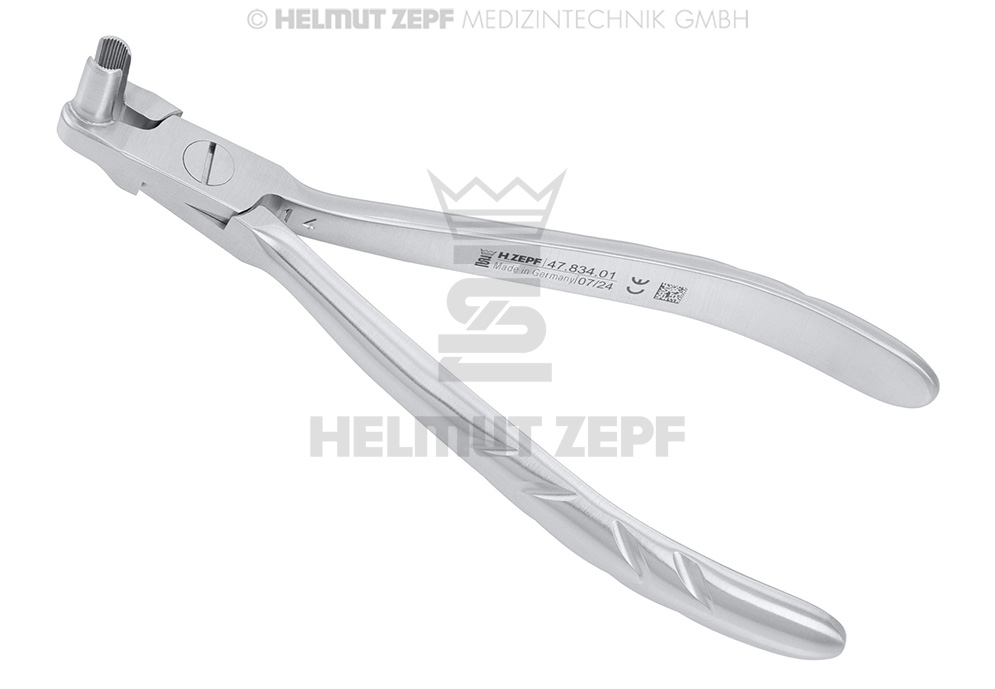
Mandibular Implant Body Extraction Forceps - Helmut Zepf (47.834.01) - Delynov
The Pince d'extraction pour corps d'implants mandibulaires - Helmut Zepf is a medical device manufactured by Helmut Zepf Medizintechnik GmbH.
- Manufacturer: Helmut Zepf Medizintechnik GmbH.
- Reference: 47.834.01.
- Reserved for healthcare professionals. Read instructions carefully before use.
| Manufacturer: Helmut Zepf |
Complete your order
Our customers often order these together
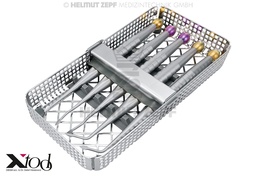 Approximal elevator kit for dental surgery, set of 5 instruments - Helmut Zepf (17.007.75) - Delynov
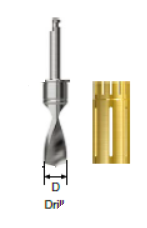 Cortical bone collector with stopper, diameter 6.0 mm (ABC604L), height 21.94 mm - Osstem - Delynov
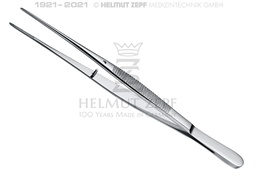 SEMKEN-TAYLOR straight tweezers - Helmut Zepf (22.278.15) - Delynov
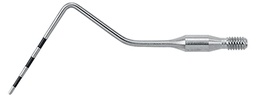 Graduated Periodontal Probe Helmut Zepf (2/4/6/8/10/12 millimeters) - Delynov
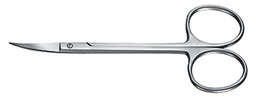 Curved Gum Scissors 11.5 cm - Helmut Zepf (46.051.11) - Delynov
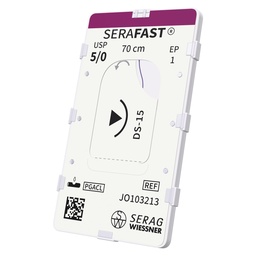 SERAFAST Absorbable Violet Suture 5/0 DS-15 Needle 70cm - Serag & Wiessner - JO103213
Recommended suture
What is the Helmut Zepf extraction forceps for mandibular implant bodies?
The extraction forceps for mandibular implant bodies, referenced under code 47.834.01 by Helmut Zepf, is a specialized surgical instrument used in oral implantology. This device is specifically structured to allow a firm grip on implant bodies located in the mandibular region. Its design meets the requirements of implant removal procedures, where grip stability is crucial for the success of the intervention. Manufactured by Helmut Zepf Medizintechnik GmbH, these forceps are part of the category of guided bone regeneration (GBR) and advanced implant surgery instruments. It is distinguished by ergonomics adapted to the anatomical constraints of the lower jaw, offering the practitioner a tool dedicated to complex explantation phases.
What are the clinical indications for this instrument?
Cette pince d'extraction est indiquée pour les interventions de chirurgie orale visant le retrait de corps d'implants mandibulaires. Elle est principalement utilisée en cas d'échec implantaire, de péri-implantite sévère nécessitant une dépose, ou lors du remplacement d'un implant défectueux ou mal positionné. En tant que pince d'explantation mandibulaire, elle permet la manipulation des composants implantaires avec la force nécessaire tout en respectant l'environnement osseux périphérique. Son utilisation est réservée aux chirurgiens oraux et aux implantologues durant les protocoles de révision. L'instrument est particulièrement utile lorsque les méthodes de dévissage conventionnelles ne sont plus applicables et qu'une extraction mécanique directe du corps implantaire devient nécessaire pour assainir le site avant une potentielle nouvelle implantation ou greffe osseuse.
What are the technical characteristics of the 47.834.01 forceps?
The Helmut Zepf extraction forceps, reference 47.834.01, features technical characteristics optimized for the mandibular area. Although detailed specifications on the exact alloys are not specified here, this instrument benefits from the expertise of Helmut Zepf Medizintechnik GmbH in manufacturing high-precision surgical instruments. The geometry of its jaws is specifically designed to adapt to the cylindrical or conical shape of implant bodies, ensuring effective force transmission without detrimental slippage. Its length and angulation are designed to facilitate access to the posterior and anterior sectors of the mandible, allowing for easy manipulation even in restricted access conditions. The finish of the instrument is intended to withstand repeated sterilization cycles in a clinical environment.
What are the contraindications for the use of these forceps?
The contraindications for using the extraction forceps for mandibular implant bodies are mainly related to the patient's clinical condition and the nature of the implant to be removed. A major contraindication lies in using the instrument on structures for which it was not designed, such as maxillary implants if the angulation does not allow it, or natural teeth. Additionally, if the patient has known allergies to the metallic components of stainless steel surgical instruments, use must be evaluated. The instrument should also not be used if the implant exhibits osseointegration such that extraction with forceps would risk causing a significant mandibular fracture. In this case, preliminary trepanation techniques may be required before using the forceps.
What are the maintenance precautions for this non-resorbable instrument?
En tant qu'instrument chirurgical métallique réutilisable et non résorbable, le davier d'extraction Helmut Zepf exige un protocole rigoureux de décontamination et de stérilisation après chaque utilisation. Les précautions incluent un nettoyage manuel ou par ultrasons pour éliminer tous les débris organiques, suivi d'un rinçage minutieux et d'un séchage complet. La stérilisation doit être effectuée en autoclave selon les paramètres recommandés par Helmut Zepf Medizintechnik GmbH. Il est impératif de vérifier l'intégrité des mors et du mécanisme d'articulation avant chaque intervention pour assurer une sécurité maximale. Une lubrification régulière des articulations avec des produits adaptés à la stérilisation à la vapeur est recommandée pour maintenir un mouvement fluide et prévenir la corrosion prématurée de l'instrument.
Who is the manufacturer and what standards are met?
Ce dispositif est fabriqué par Helmut Zepf Medizintechnik GmbH, un fabricant reconnu d'instrumentation chirurgicale basé en Allemagne. Les produits Helmut Zepf sont conçus selon les standards de qualité élevés de l'industrie médicale européenne. Les praticiens sont invités à se référer à l'étiquetage du produit et à la notice d'utilisation pour confirmer les certifications spécifiques, les normes ISO appliquées et les instructions de sécurité conformes au Règlement sur les Dispositifs Médicaux (MDR). La référence 47.834.01 assure la traçabilité de cet instrument au sein de la gamme chirurgicale de la marque.
State of the art
Guided bone regeneration (GBR) in implantology relies on membrane fixation quality.