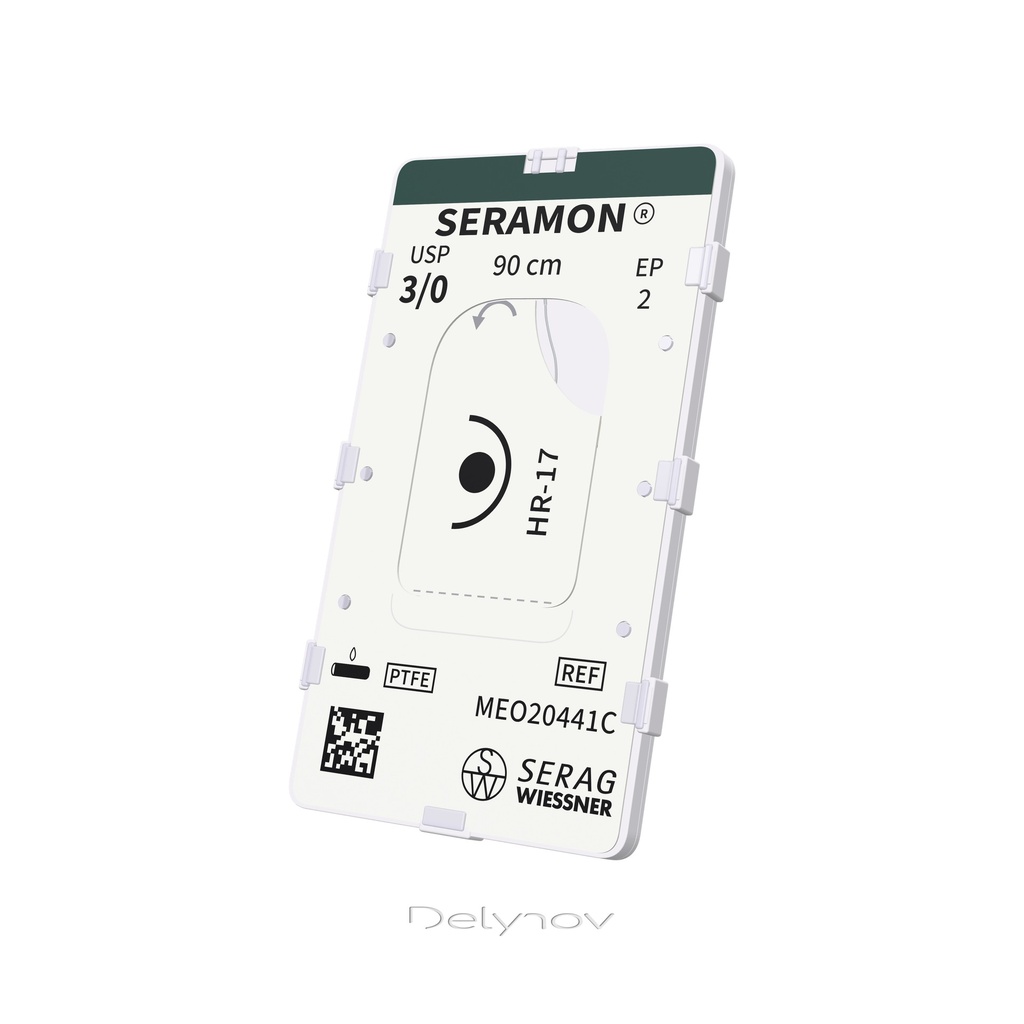
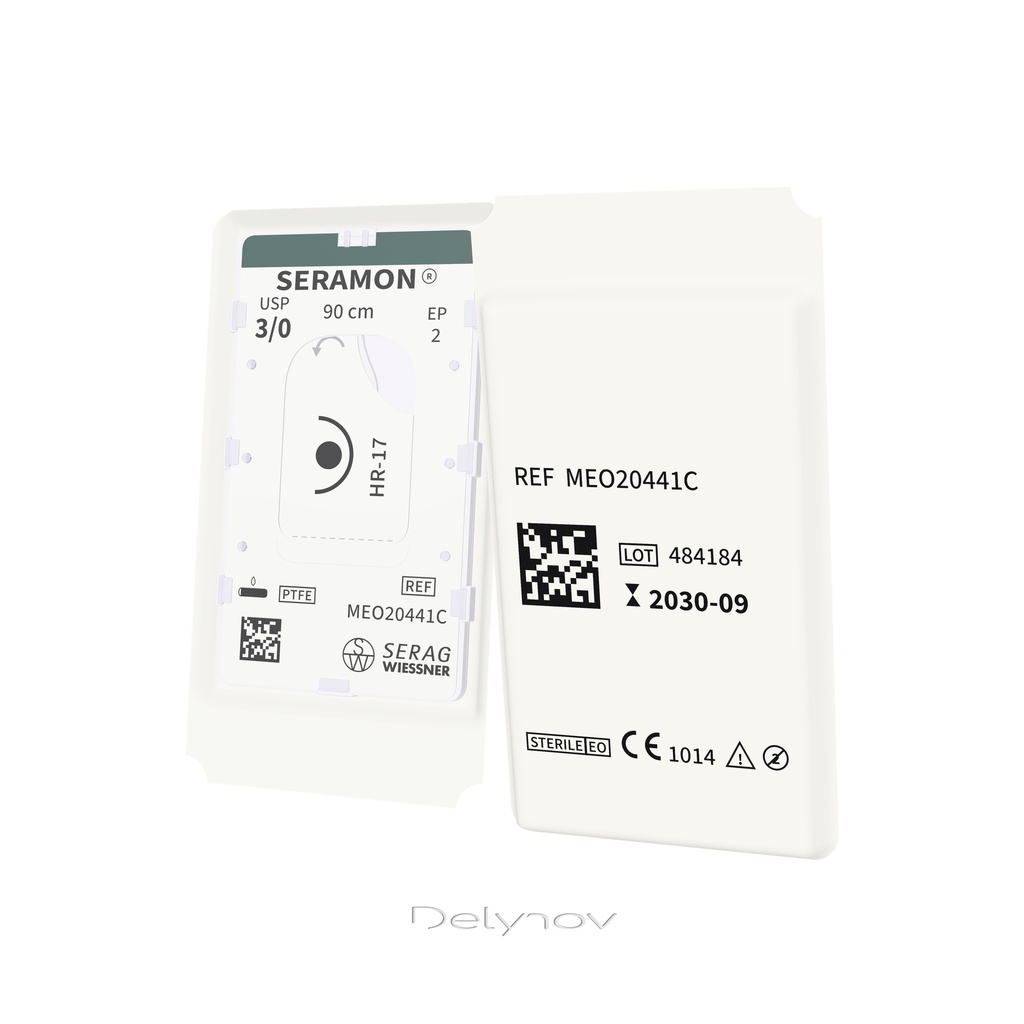
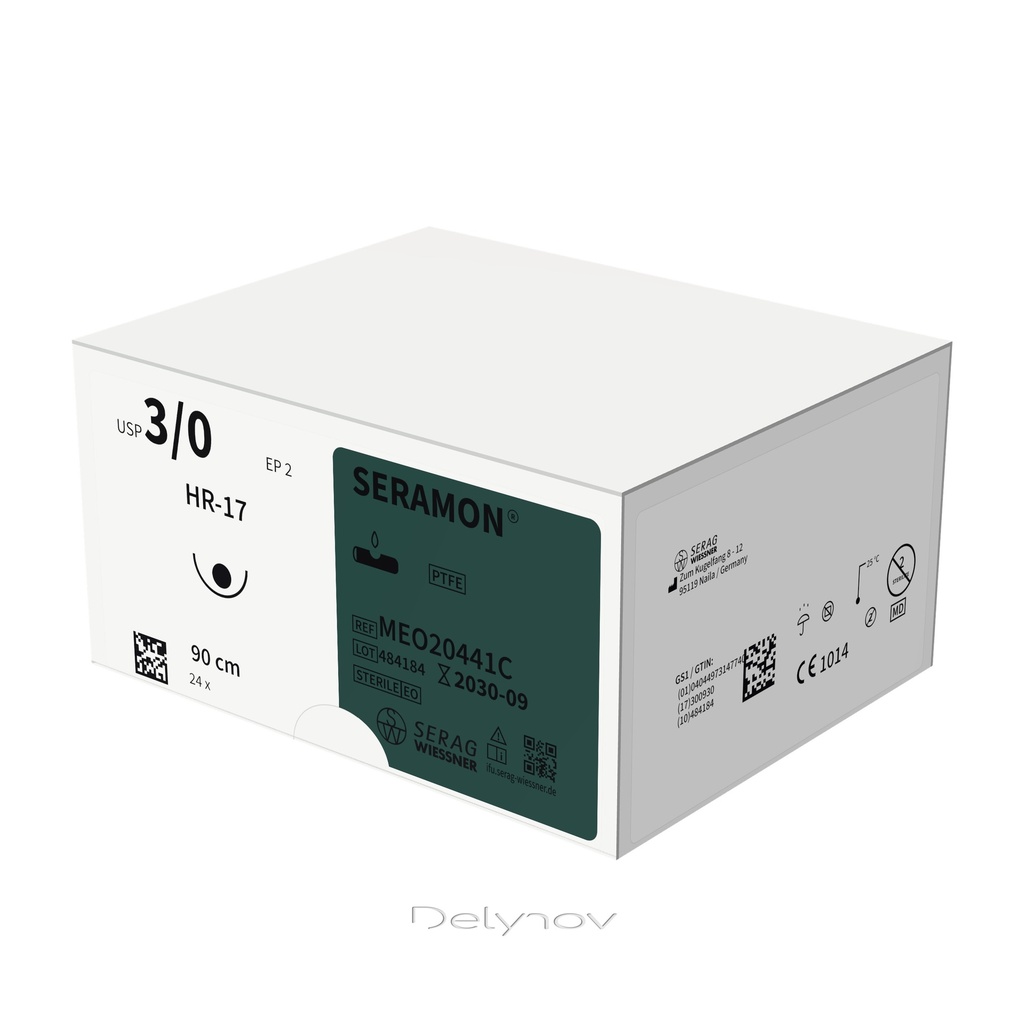
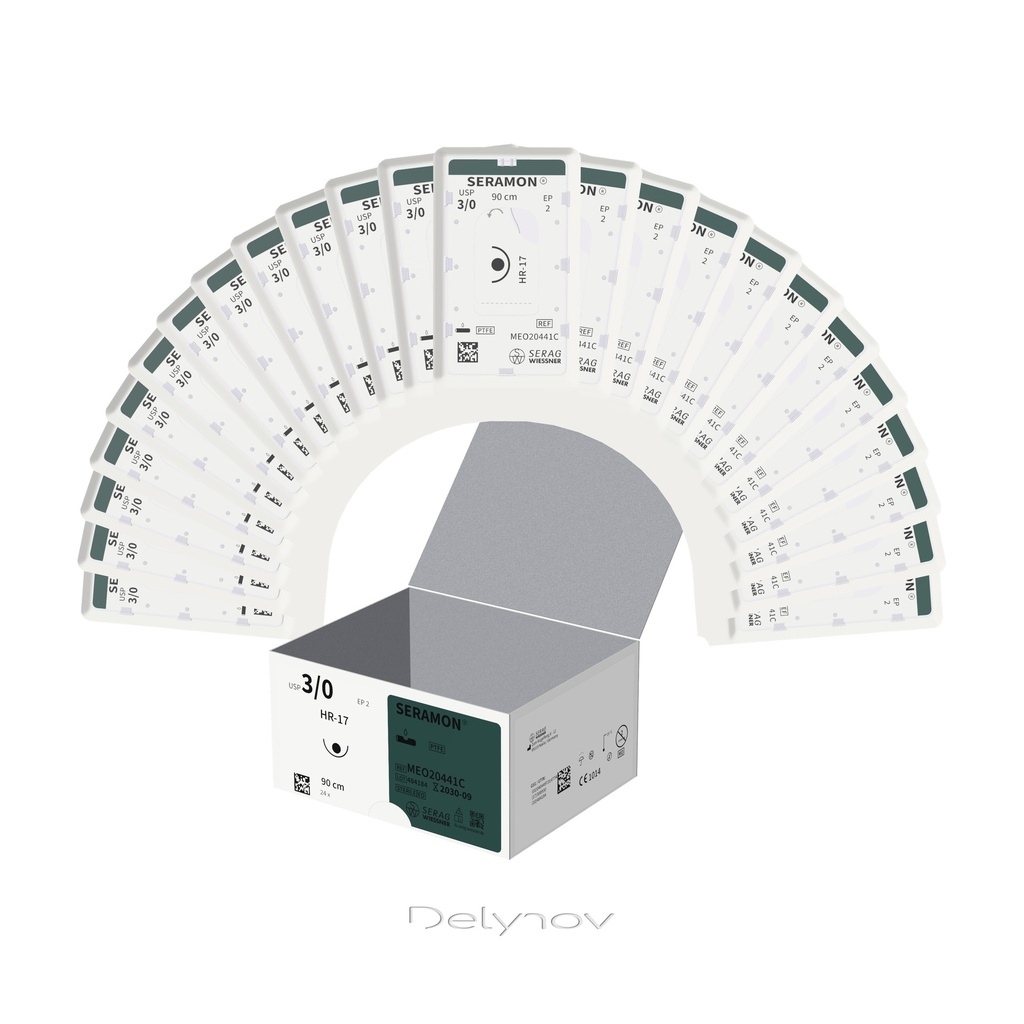
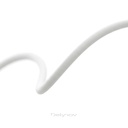
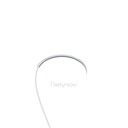
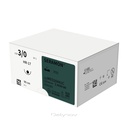
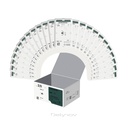
SERAMON non absorbable clear (3/0) HR-17 needle of 90 CM box of 24 sutures - Serag & Wiessner (MEO20441C) - Delynov
Product features
The SERAMON suture by Serag-Wiessner GmbH & Co. KG is a non-absorbable monofilament synthetic medical device, indicated for oral surgery and implantology where prolonged material stability is required.
- Material: de base du fil de suture se compose de polytétrafluoréthylène (ptfe). seramon® est proposé exclusivement non coloré. il est disponible dans des calibres et longueurs de fil différents.
- Type: Non-absorbable (suture removal required after healing).
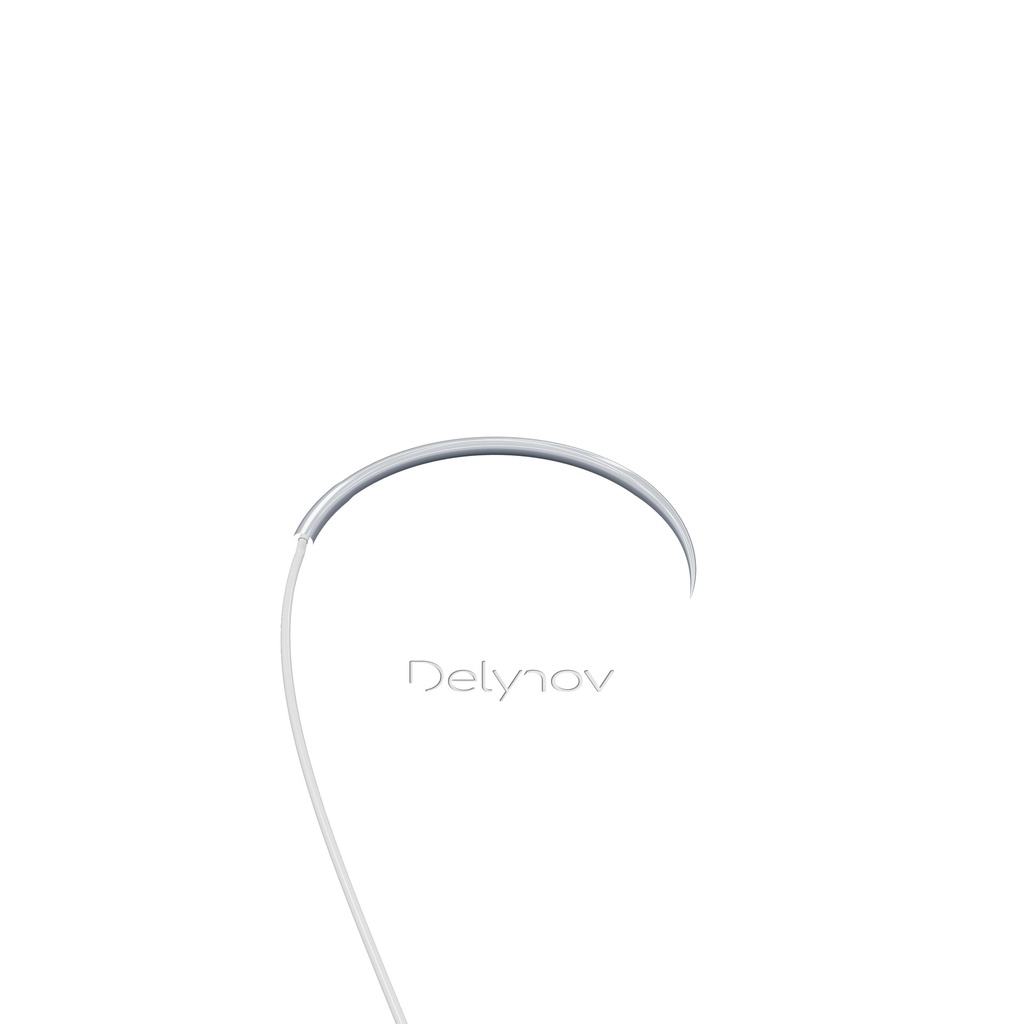
- Needle: HR-17 (17 mm), 1/2 circle, round tip.
- Format: Thread length 90 cm, caliber 3/0 (usp).
- Packaging: Box of 24 single-use sterile sutures.
- Compliance: Class III medical device, CE marking CE1014.
- Manufacturer: Serag-Wiessner GmbH & Co. KG.
fabricant : serag-wiessner gmbh & co. kg, zum kugelfang 8-12, 95119 naila/allemagne usage prévu : suture chirurgicale description et emploi :seramon® est un matériel de suture chirurgical synthétique, monofil et non résorbable. le matériau de base du fil de suture se compose de polytétrafluoréthylène (ptfe). seramon® est proposé exclusivement non coloré. il est disponible dans des calibres et longueurs de fil différents. les matériels de suture en ptfe sont fournis en assortiments avec divers types d’aiguille en acier chirurgical ou sans aiguille. des pledgets destinés à renforcer les structures corporelles endogènes peuvent être fournis avec seramon®. les matériels de suture sont conformes aux exigences de l’édition actuelle de la monographie de la pharmacopée européenne (ph. eur.) concernant les « matériaux de suture stériles, non résorbables (fila non resorbilia sterilia) », à l’exception d’éventuels écarts négligeables concernant le diamètre du fil. seramon® est prévu pour l’adaptation des tissus mous ou pour la ligature, pour lesquelles un matériel de suture non résorbable est indiqué, y compris l’utilisation dans le système circulatoire et nerveux central. les fils en ptfe peuvent également servir de fils de soutien et de moyen de marquage. lire attentivement la notice. avertissements et précautions : contre-indications : le dispositif ne doit pas être utilisé chez les patients présentant des allergies à l'un des composants du produit. restrictions et limites d'utilisation / remarques / interactions : on ne dispose encore d’aucune expérience suffisante dans la microchirurgie, en ophtalmologie et dans le domaine des interventions chirurgicales sur les nerfs périphériques. les exigences en termes de matériel de suture et de techniques nécessaires varient suivant les indications. le choix du matériel de suture doit tenir compte des caractéristiques du matériel de suture concerné. comme tout corps étranger, le dispositif peut provoquer la formation de calculs quand il reste en contact prolongé avec les voies biliaires ou urinaires. seramon® peut, compte tenu de sa structure monofil, être utilisé aussi dans les tissus présentant un risque d’infection. lors de l’utilisation pour suturer des tissus infectés, il est recommandé d’appliquer des mesures d’accompagnement appropriées. les instruments chirurgicaux doivent être manipulés avec précaution pour éviter d’endommager les fils. il ne faut pas plier les aiguilles ou les saisir en dehors de la zone recommandée pour éviter qu’elles se brisent. étant donné le risque d’infection inhérent aux piqûres d’aiguilles, celles-ci doivent être manipulées avec un soin particulier. réservé aux professionnels de santé.
| Manufacturer: Serag-Wiessner Suture Materials |
Complete your order
Our customers often order these together
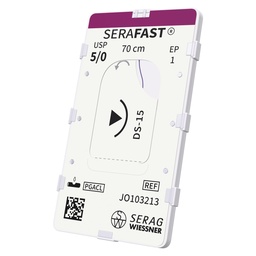 SERAFAST Absorbable Violet Suture 5/0 DS-15 Needle 70cm - Serag & Wiessner - JO103213
Recommended suture
What is the SERAMON (3/0) suture from Serag-Wiessner?
SERAMON is a synthetic, monofilament, non-absorbable surgical suture material designed by the manufacturer Serag-Wiessner. Its monofilament structure is composed exclusively of polytetrafluoroethylene (PTFE), a polymer recognized for its stability. This medical device is offered in an undyed (colorless) version, ensuring optimal biocompatibility for surgical interventions. This specific model features a 3/0 (USP) calibre with a thread length of 90 cm. Its monofilament design allows for smooth passage through soft tissues, limiting the wick effect and the accumulation of bacterial plaque. It meets the requirements of the European Pharmacopoeia concerning sterile non-absorbable suture materials, thus offering a reliable solution for demanding practitioners.
What are the clinical indications for SERAMON in surgery?
The SERAMON PTFE suture is indicated for soft tissue adaptation or for ligation in cases where a non-absorbable material is required. Its use extends to various specialties, including interventions on the circulatory system and the central nervous system. In oral surgery and implantology, this thread is particularly appreciated for its strength and chemical inertness. PTFE threads can also serve as support threads or as a means of marking depending on clinical needs. The choice of this material must be made by the practitioner, taking into account the specific characteristics of the wound and the surgical techniques employed. It is essential to read the instructions carefully before use to ensure patient safety.
What are the technical characteristics of the HR-17 needle?
The Serag-Wiessner reference MEO20441C is equipped with an HR-17 type needle. According to technical nomenclature, the code HR designates a 1/2 circle round-bodied needle. This configuration is specifically indicated for performing deep sutures and ligations, allowing precise penetration while respecting the integrity of surrounding tissues. The number 17 indicates a needle length of 17 mm. Manufactured from high-quality surgical steel, this needle is securely swaged to the 90 cm thread. The combination of a 3/0 calibre and an HR-17 needle offers an ideal balance for procedures requiring easy handling and secure tissue holding during the closure of operative sites.
What are the contraindications for the use of this PTFE suture?
The use of the SERAMON device presents certain limits and contraindications defined by the manufacturer Serag-Wiessner GmbH & Co. KG. This suture material must not be used in patients with known allergies to polytetrafluoroethylene (PTFE) or any of the product's components. Furthermore, current clinical data do not allow for the establishment of sufficient experience for its application in certain specific fields such as microsurgery, ophthalmology, or interventions on peripheral nerves. It is the surgeon's responsibility to evaluate the benefit-risk ratio based on the patient's history and the nature of the intervention. Compliance with these restrictions is essential to prevent any post-operative complications related to the material.
What are the precautions related to the non-absorbable nature of SERAMON?
As SERAMON is a non-absorbable PTFE suture, it does not undergo degradation by hydrolysis or enzymatic action in the body. It permanently retains its tensile strength, which requires rigorous management of knots and tension during placement. The practitioner must adapt their suture technique to the physical properties of the monofilament to ensure long-term stability. Unlike absorbable threads, this material will remain in place until its manual removal by the practitioner, unless it is used as a permanent implant in specific structures. Particular attention must be paid during handling to avoid damaging the thread structure, thereby ensuring patient safety and comfort during the healing phase.
Who is the manufacturer and what standards are met by this product?
This suture is manufactured by Serag-Wiessner GmbH & Co. KG, headquartered in Naila, Germany. The product is classified as a Class III medical device, meeting the strictest regulatory requirements for surgical implants. It carries the CE1014 marking, certifying its compliance with European safety and performance standards. Additionally, the SERAMON suture material complies with the requirements of the current edition of the European Pharmacopoeia (Ph. Eur.) monograph relating to sterile non-absorbable suture materials (fila non resorbilia sterilia). This compliance guarantees consistent quality of the thread diameter and its sterility, providing healthcare professionals with a reliable device for their daily surgical procedures.
State of the art
Modern synthetic sutures, whether absorbable or non-absorbable, are central to wound healing in oral surgery. Recent advances focus on reducing post-operative infections, optimizing keratinized gingival tissue thickness, and innovating composite materials.