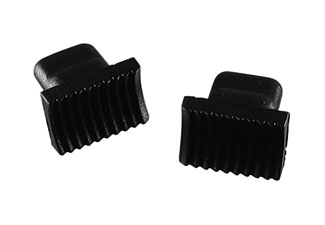
Spare Jaws for Forceps - Helmut Zepf (19.270.50) - Delynov
The Mors de rechange pour pince - Helmut Zepf is a medical device manufactured by Helmut Zepf Medizintechnik GmbH.
- Compliance: Medical device Class I.
- Manufacturer: Helmut Zepf Medizintechnik GmbH.
- Reference: 19.270.50.
- Reserved for healthcare professionals. Read instructions carefully before use.
| Manufacturer: Helmut Zepf |
Complete your order
Our customers often order these together
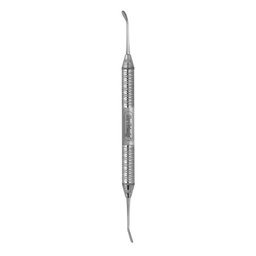 Dr Istvan Urban "Mini Me" Micro Periosteal Elevator (PFIWDS1MK) - Hu-Friedy - Delynov
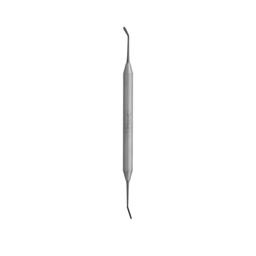 Dr Urban Isvan "Mini Me" Micro Periosteal Elevator, Black Line - Hu-Friedy (PFIWDS1MKX) - Delynov
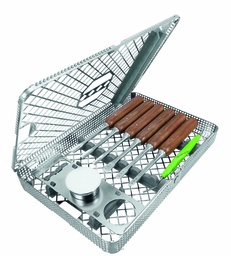 Kit de chirurgie Immediate Dentoalveolar Restoration (IDR) du Dr José Carlos Martins Da Rosa - Helmut Zepf (41.550.00) - Delynov

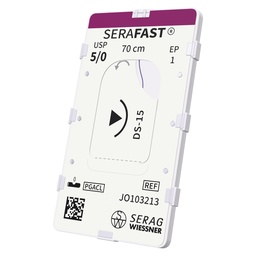 SERAFAST Absorbable Violet Suture 5/0 DS-15 Needle 70cm - Serag & Wiessner - JO103213
Recommended suture
What is the Helmut Zepf replacement jaw for forceps?
The replacement jaw for forceps, bearing reference 19.270.50, is a technical component designed by Helmut Zepf Medizintechnik GmbH. This device is specifically developed to replace the worn working part of surgical forceps or a needle holder. Manufactured from medical stainless steel, this jaw guarantees the operational continuity of the instrumentation without requiring the complete replacement of the tool. As a surgical forceps replacement part, it maintains the clamping quality and reliability essential during oral surgery and periodontology procedures.
What are the clinical indications for this device?
L'utilisation de cette mâchoire de remplacement Helmut Zepf est indiquée pour l'entretien des instruments manuels employés en chirurgie orale et en implantologie. Elle est principalement utilisée dans le cadre de la Régénération Osseuse Guidée (ROG) et des sutures complexes où une mâchoire de porte-aiguille doit présenter une surface de contact intacte pour prévenir tout glissement. Ce composant est destiné exclusivement aux professionnels de santé formés, garantissant que l'instrument restauré répond aux exigences de manipulation des tissus mous et durs en milieu clinique.
What are the technical characteristics of this replacement jaw?
This replacement jaw for forceps (reference 19.270.50) is characterized by its compatibility with instruments from the Helmut Zepf range. Designed in medical stainless steel, it is delivered non-sterile and must undergo a complete cleaning, disinfection, and sterilization cycle before its first use. Its design allows for precise integration onto the body of the original forceps. It is essential to verify compatibility with the main instrument before any installation to ensure patient safety and the effectiveness of the surgical gesture.
What are the contraindications for the use of this jaw?
La principale contre-indication liée à l'utilisation de cette pince de chirurgie orale concerne une hypersensibilité ou intolérance connue aux métaux, spécifiquement l'acier inoxydable médical, chez le patient. Si une réaction allergique ou une intolérance survient lors du contact avec l'instrument, la procédure doit être immédiatement interrompue et des mesures cliniques appropriées prises. Il est également interdit d'utiliser ce produit s'il présente des dommages visibles tels que des fissures, des cassures ou des défauts sur les bords tranchants après retraitement.
What are the maintenance and sterilization precautions?
Like any Helmut Zepf instrument, this replacement jaw must be cleaned, disinfected, and sterilized before each use. Due to its stainless steel composition, there is no defined maximum limit for processing cycles, but a rigorous inspection is mandatory. The practitioner must actively check for any signs of wear or corrosion. The use of damaged products is strictly prohibited. Compatibility with other cleaning products and autoclave sterilization protocols must be validated beforehand by the practice.
Who is the manufacturer and what standards are respected?
Ce dispositif est fabriqué par Helmut Zepf Medizintechnik GmbH, un fabricant reconnu situé en Allemagne. Le produit est classé comme un dispositif médical de Classe I (Classe Ir selon le texte de référence). Il répond à des exigences réglementaires strictes pour les instruments chirurgicaux manuels. Le respect des protocoles de nettoyage et de stérilisation décrits est essentiel pour garantir la conformité du dispositif lors de son utilisation en salle d'opération ou au cabinet de chirurgie orale.
State of the art
Guided bone regeneration (GBR) in implantology relies on membrane fixation quality.