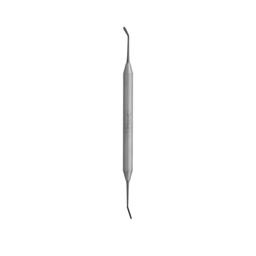
Instrument with composite handle Baldwin No. 49, shaft No. 41 - Hu-Friedy - Delynov
The Instrument à composite Baldwin #49 manche #41 - Hu-Friedy is a medical device manufactured by Hu-Friedy Mfg. Co., LLC.
- Compliance: Medical device Class I.
- Manufacturer: Hu-Friedy Mfg. Co., LLC.
- Reserved for healthcare professionals. Read instructions carefully before use.
| Manufacturer: Hu-Friedy |
Complete your order
Our customers often order these together
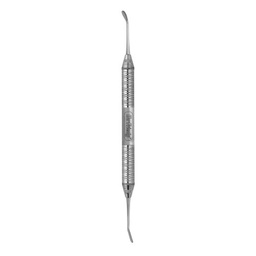 Dr Istvan Urban "Mini Me" Micro Periosteal Elevator (PFIWDS1MK) - Hu-Friedy - Delynov
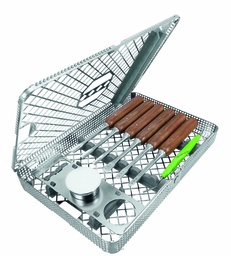 Kit de chirurgie Immediate Dentoalveolar Restoration (IDR) du Dr José Carlos Martins Da Rosa - Helmut Zepf (41.550.00) - Delynov
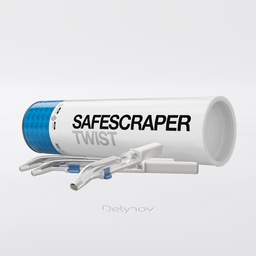 Safescraper Twist Curve - Sterile Cortical Bone Scraper - Meta - Set of 3 - 3987
 Dr Urban Isvan "Mini Me" Micro Periosteal Elevator, Black Line - Hu-Friedy (PFIWDS1MKX) - Delynov

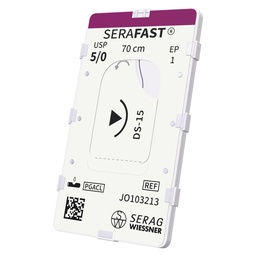 SERAFAST Absorbable Violet Suture 5/0 DS-15 Needle 70cm - Serag & Wiessner - JO103213
Recommended suture
What is the Baldwin #49 composite instrument with #41 handle?
The Baldwin #49 composite instrument, combined with the #41 handle, is a precision manual device manufactured by Hu-Friedy. It belongs to the category of restorative instruments (INSTRU) and consists of two active ends specifically designed for working with composite materials. Its balanced structure allows for rigorous control during the application of resins. This medical device is classified as Class I according to current regulations. As a product of Hu-Friedy Mfg. Co., LLC, it benefits from the expertise of a recognized manufacturer in the design of tools for oral surgery and restorative dentistry.
What are the clinical indications for this Hu-Friedy instrument?
This instrument is primarily indicated for restorative dentistry procedures involving the use of composite materials. In oral and conservative surgery, it is used for transporting, inserting, and modeling resins into prepared cavities. The Baldwin #49 shape is particularly useful for sculpting anatomical reliefs and ensuring good condensation of the material against the cavity walls. Its use is reserved for qualified healthcare professionals operating in routine or complex dental care contexts requiring fine manipulation of restorative materials.
What are the technical characteristics of the instrument?
The Baldwin #49 instrument is distinguished by its #41 type handle, offering a grip adapted to the requirements of modern dentistry. It is a double instrument, featuring two working parts that allow the practitioner to vary approach angles without changing tools. Manufactured by Hu-Friedy Mfg. Co., LLC, this Class I device meets the rigorous manufacturing standards of the Chicago-based company. Although specific material details are not listed, the design is optimized to withstand standard sterilization cycles in dental offices while maintaining the integrity of its active ends.
What are the contraindications for the use of this device?
According to the information provided by the manufacturer Hu-Friedy, specific contraindications are not detailed beyond general warnings. However, the use of this instrument is strictly reserved for trained healthcare professionals. The instrument should not be used for tasks other than those intended (composite modeling), in order to avoid any deformation of the active ends or risk to the patient. Practitioners must consult the instructions for use provided by Hu-Friedy Mfg. Co., LLC to identify any restrictions related to particular clinical protocols or equipment maintenance.
What are the precautions for use and maintenance?
Like any Class I instrument intended for surgery and restoration, the Hu-Friedy Baldwin #49 instrument requires careful handling. Before any use, it is imperative to carefully read the instructions provided by the manufacturer. Although this product is not an absorbable suture and does not exhibit a biological degradation process, it must follow a strict protocol of cleaning, disinfection, and sterilization between each patient. Maintaining the surface condition of the active ends is crucial to prevent undesirable adhesion of the composite during the clinical modeling phase.
Who is the manufacturer and what standards are respected?
The instrument is manufactured by Hu-Friedy Mfg. Co., LLC, headquartered at 3232 N. Rockwell St. Chicago, Il 60618, USA. This medical device is listed as Class I, which corresponds to products presenting a low risk level according to the regulatory classification of medical devices. The Hu-Friedy brand is internationally recognized for the quality of its manual instruments. Healthcare professionals must refer to the manufacturer's indications and warnings to ensure use in compliance with the safety and clinical efficacy standards in force in the European Union and internationally.
State of the art
Specialized surgical instrumentation is evolving towards ergonomic designs.